Clara Lou Villechaise
“Nature is not a place you go to, it's an idea that you manipulate” Timothy Morton
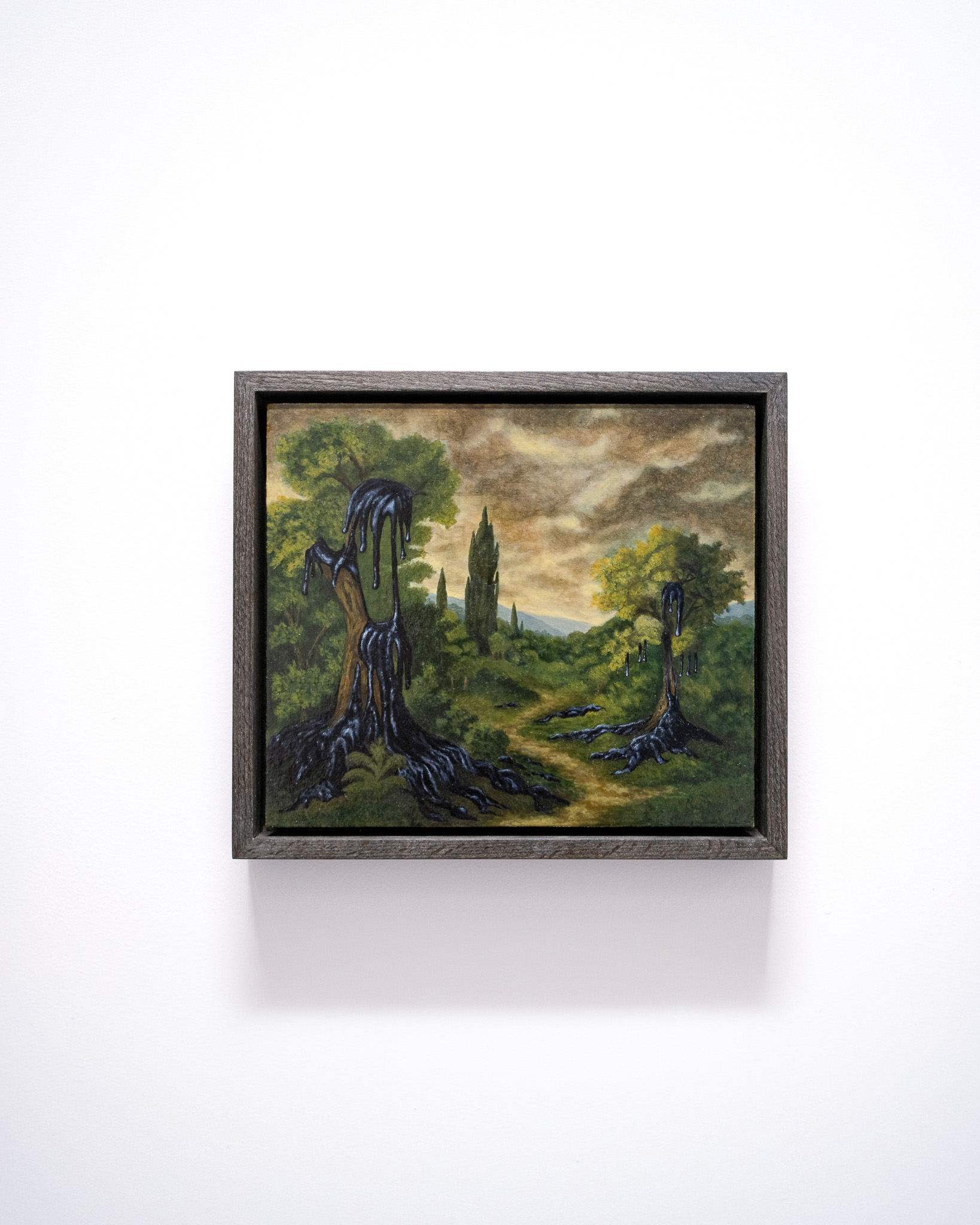
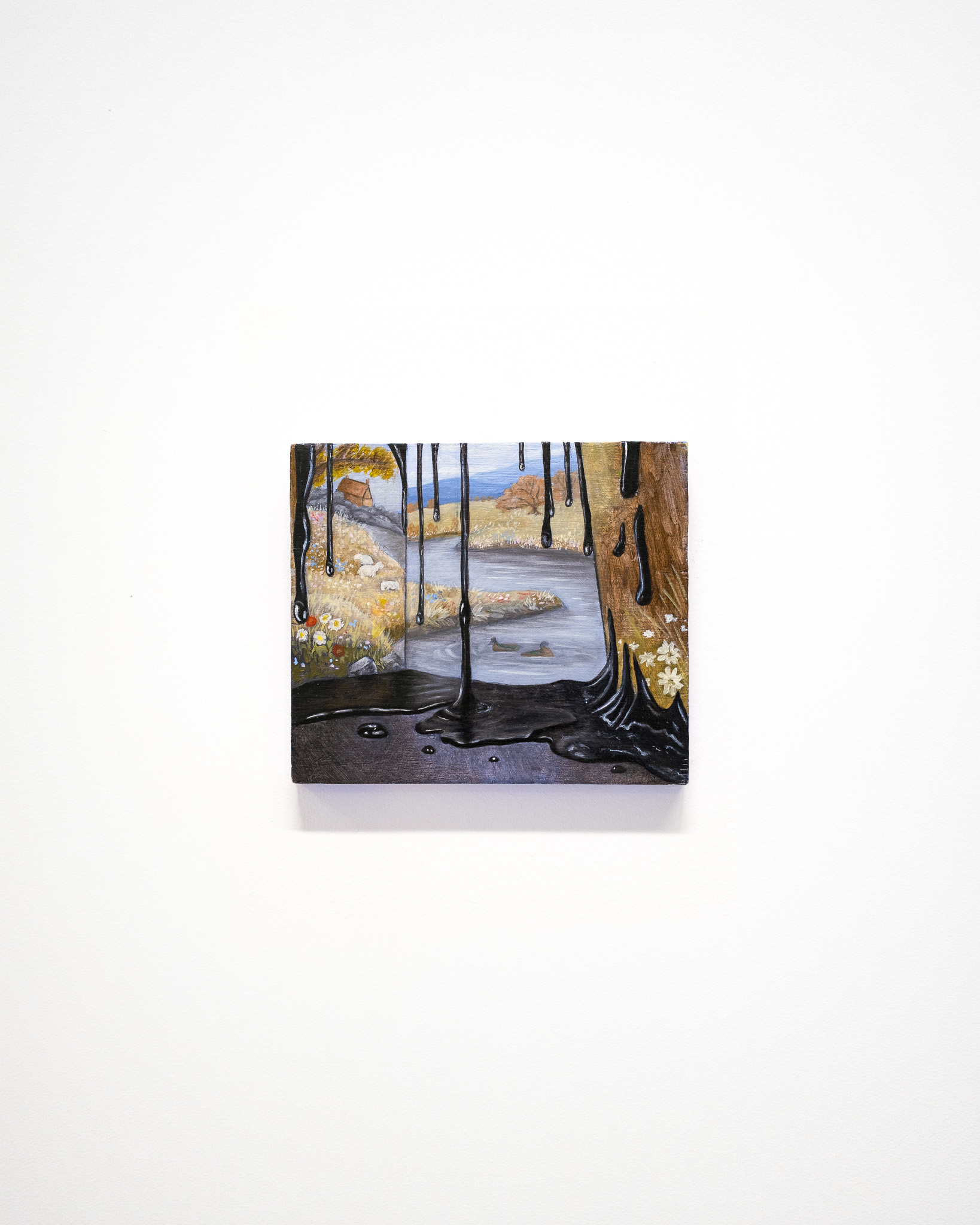
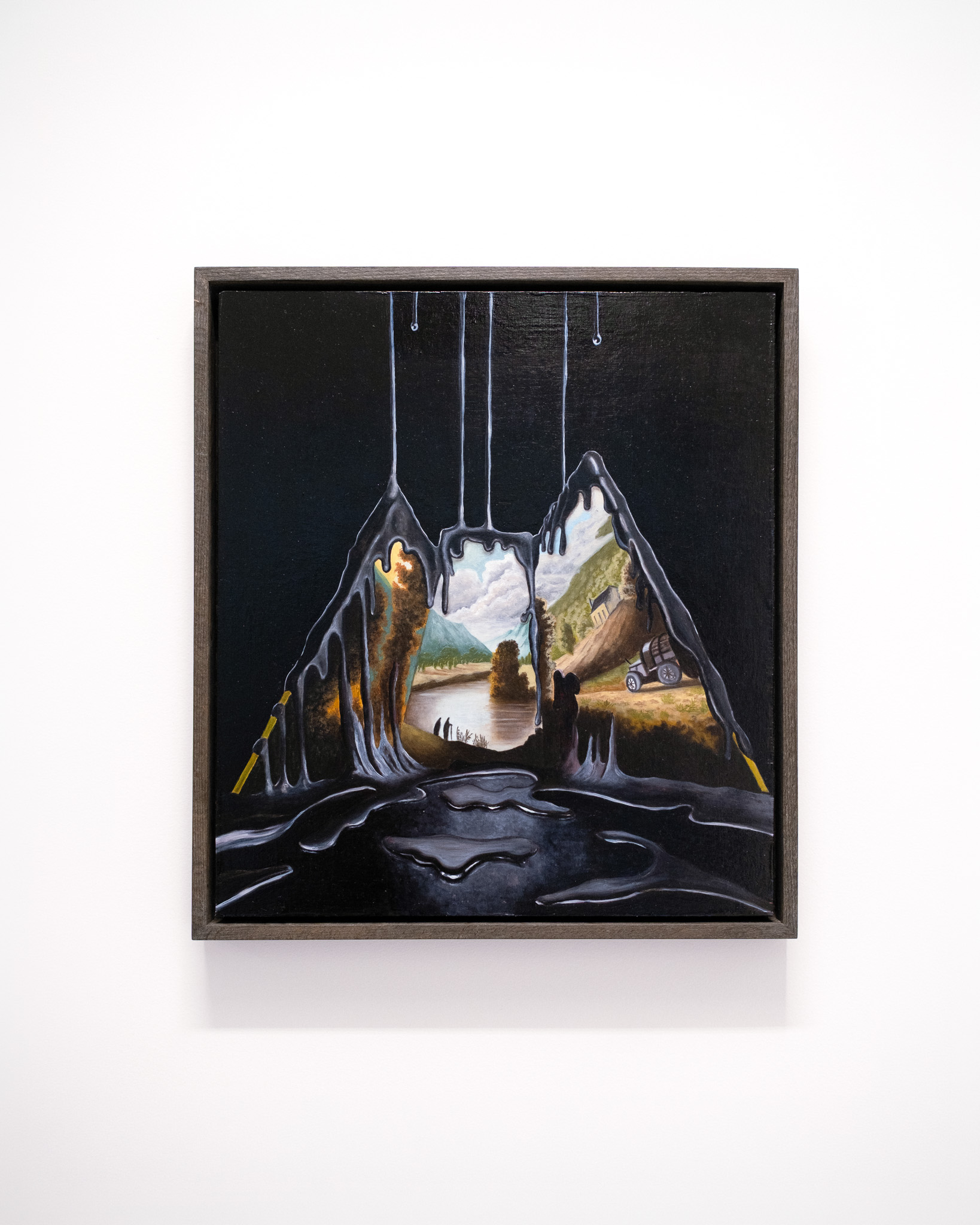
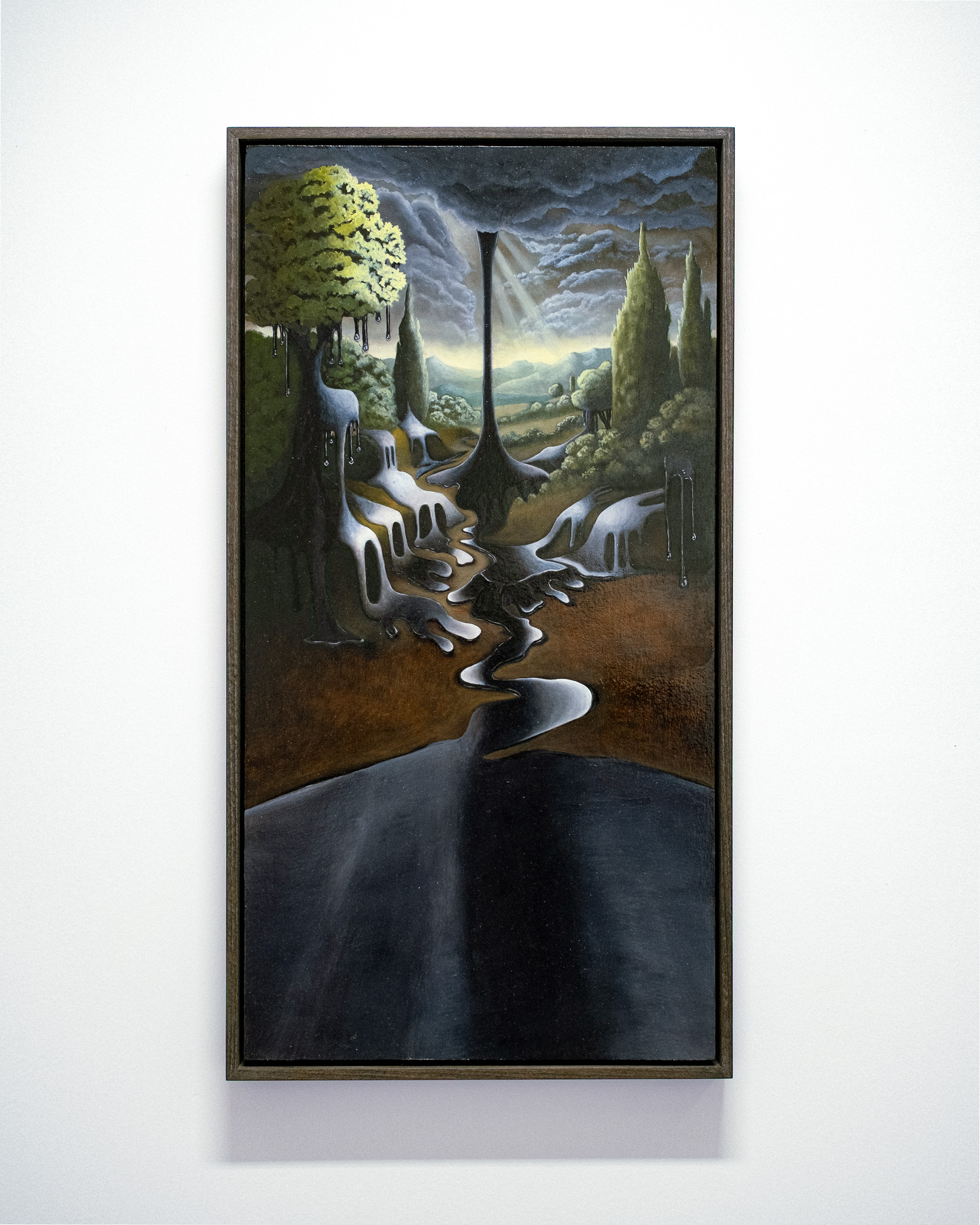
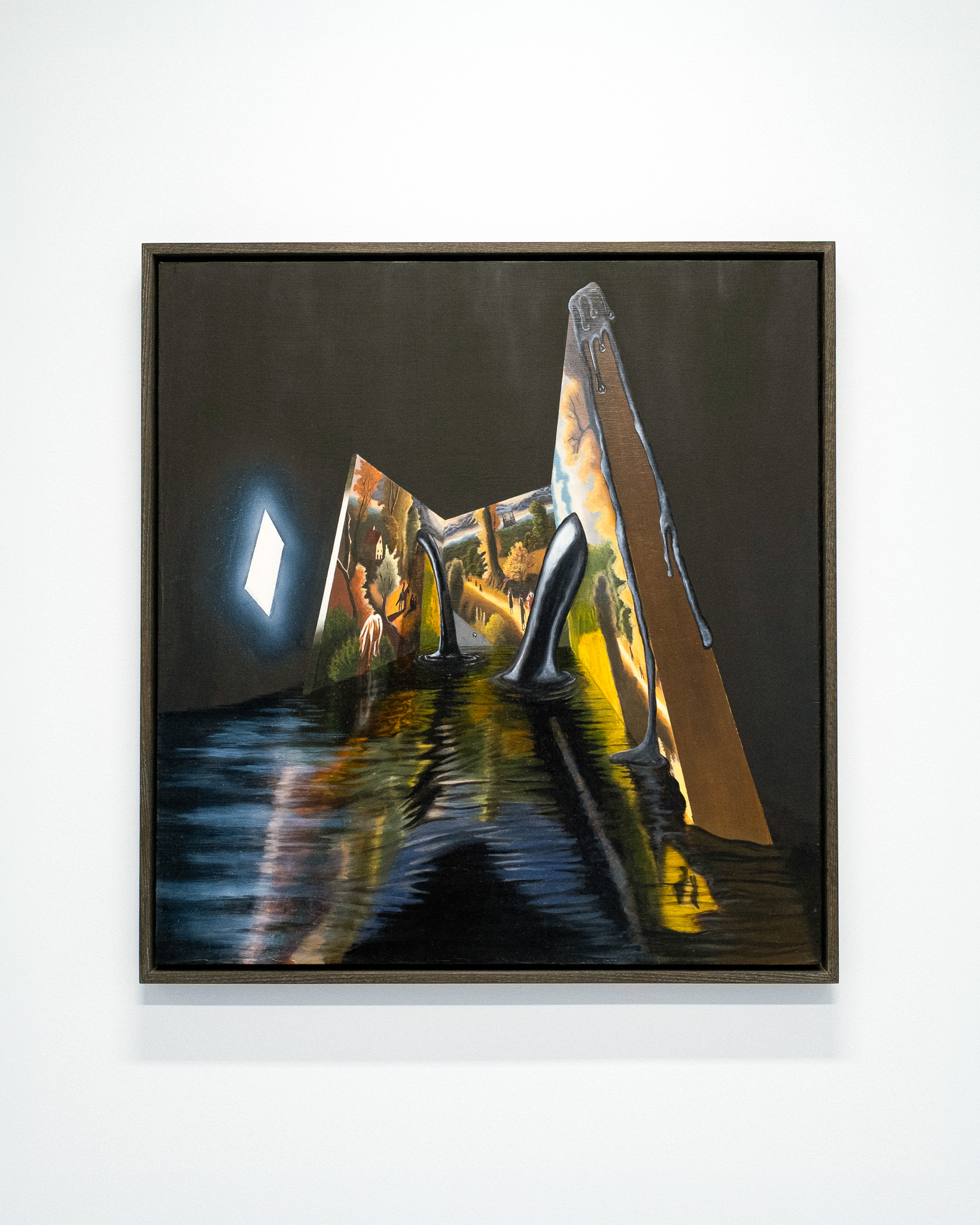
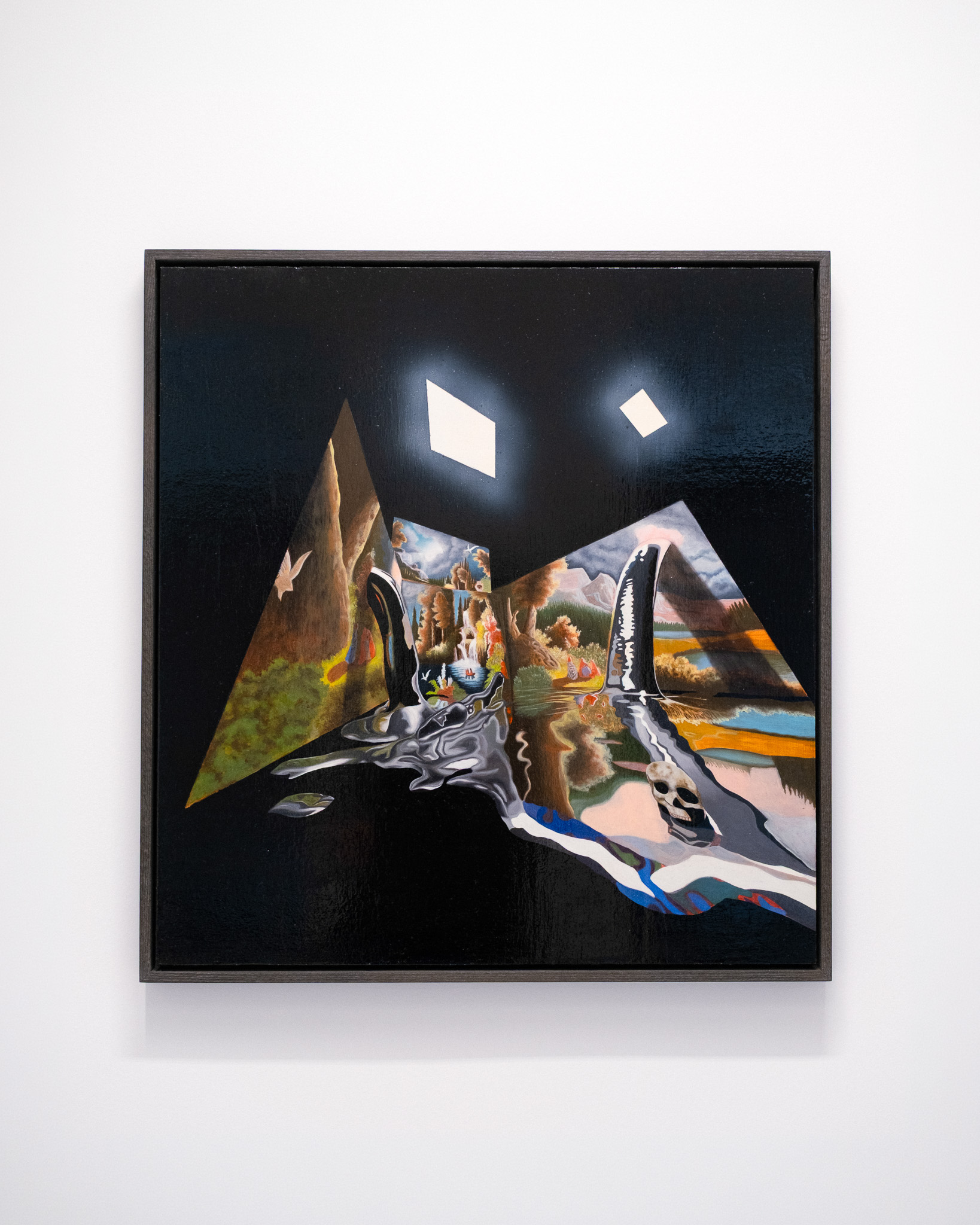
Timothy Morton offers a decisive entry into the work of Clara Lou Villechaise. In his paintings, the landscape is never an external territory to be reached. It appears as a mental construct, an operative fiction by which the era is still trying to stabilize the world. Nature is less a reality than a visual model: a form of regulatory image, produced to contain contemporary uncertainty. The artist mobilizes the persistent codes of pastoral painting; peaceful reliefs, waterways, open clearings, mountainous horizons. These patterns, deeply rooted in the Western imagination, are replayed as decorative elements. They reveal the historical function of the landscape: to organize a harmonious vision of the world, to produce a nature that is available, legible, morally reassuring. The landscape is no longer given as a space to inhabit but as a surface to look at, framed to maintain a comfortable distance from what it claims to show. In his compositions, landscape fragments are isolated, projected onto geometric structures or suspended in dark environments, without stable anchoring. They float in an unspeakable space, bathed in artificial light that evokes less the natural atmosphere than screen irradiation. This dislocation introduces a fundamental break: the image no longer guarantees access to reality; it functions as an autonomous system, closed to its own conditions of production. Here, the work joins Jean Baudrillard's analyses of the simulacrum: no longer representing a pre-existing world, but producing a substitute reality. Clara Lou Villechaise's landscapes do not describe nature; they offer a synthetic, mediatized version of it, already filtered by contemporary visual regimes. However, this apparent iconographic mastery is continuously disturbed. Under the precision of the patterns, unstable materials emerge: oily webs, thick drips, uncertain viscosities. They evoke both industrial residues, petrochemical flows, and organic substances in transformation. These presences not only alter the surface; they work on it from the inside, making it porous. The landscape, designed as a stabilized projection space, is then invaded by what it sought to exclude.
Salomé Moindjie-Gallet